


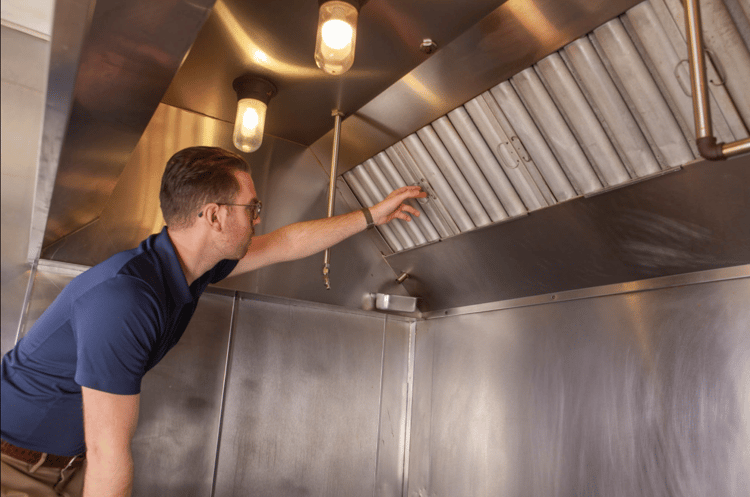
NFPA 96, Standard for Ventilation Control and Fire Protection of Commercial Cooking Operations, was first published in 1961 and has been continuously updated ever since to address the evolving world of kitchen safety. Of course, one of its many subjects is grease inspections. Grease depth inspections are more than a compliance checkbox. For affiliates, they create predictable hood and duct cleaning cycles while protecting life and property. In this blog, we’ll dive into the problems grease can cause, how to properly inspect any accumulation, and proactive measures to take.
Affiliate Inspection Guidelines
As previously discussed, NFPA 96 contains the standards for addressing grease in hoods, ducts, and exhaust systems. Contrary to popular belief, depth assessments aren't just for surface grease. They’re essential for hoods, ducts, and exhaust systems, as they often require cleaning and help mitigate risks. However, not every type or volume of cooking is inspected at the same rate. The 2024 edition of NFPA 96 has the following table.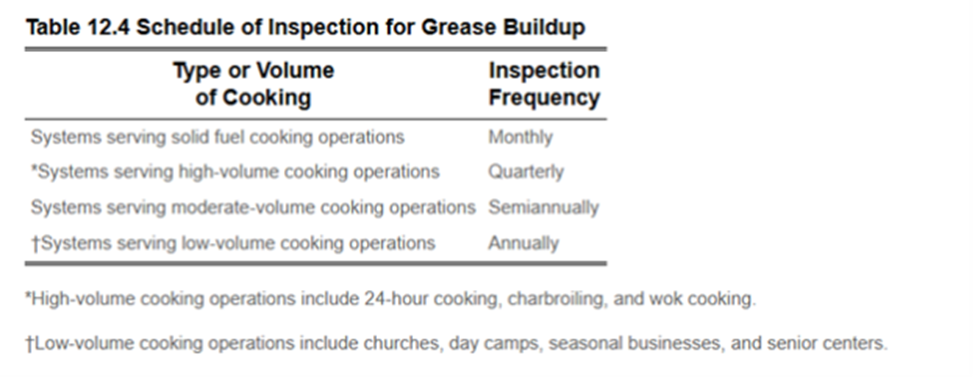
As illustrated by NFPA, when one of these four system types is undergoing inspection, a grease depth gauge comb is placed on the surface.
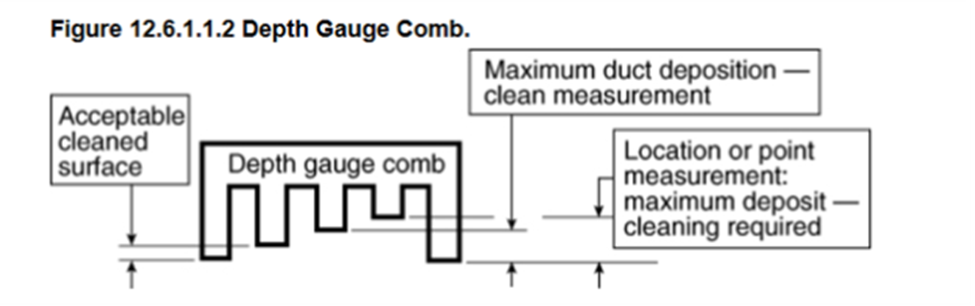
If the grease depth reaches 0.078 inches (2000 μm), the surfaces must be cleaned accordingly. For fan housings, 0.125 inches (3175 μm) means a cleaning should be performed as outlined in the standard. Additionally, all surfaces should be maintained to prevent grease accumulation exceeding 0.002 inches (50 μm).
What happens after the depth is determined isn’t cut-and-dry. In fact, it’s at the sole discretion of the Authority Having Jurisdiction (AHJ). For example, the Kansas State Fire Marshal has their own set of rules to follow. “During a routine fire safety inspection, KSFM inspectors will occasionally find facilities with significant grease buildup on floors, walls, cooking equipment, and hoods. Because this buildup, when combined with open flames and hot cooking equipment increases the risk of a fire breaking out, a SCO [Stop Cooking Order] will be issued until everything has been properly cleaned and documentation has been submitted to KSFM enforcement staff.” Having a strict cleaning schedule in place helps prevent a time-consuming, tedious process while keeping life and property safe.
How Grease Depth Inspections Lead to Periodic Cleaning
With the thresholds and procedures in mind, hood and duct cleanings are practically inevitable. Fortunately, this creates a great opportunity for affiliates. According to Ziva Cleaning Services, cleanings can cost up to $2,500 per visit. And considering that NFPA found grease hoods/duct exhaust fans were responsible for 150 fires between 2010 and 2014 alone, resulting in $7 million in damage, there’s much work to be done.
As an affiliate, prioritizing proactive maintenance over emergency cleaning can create recurring service opportunities and strengthen long-term customer relationships. A great way to start is to clearly communicate the risks of grease accumulation and the costs they would save versus dealing with the aftermath. As stated before, every kitchen is different, so one establishment may need cleaning every 14 days, but another may need it every 90 days. This, of course, is based on the measured accumulation rates in the prior section. But putting in the work and turning this into a widespread effort will support a consistent workload across multi-location clients.
Reducing Grease at the Source with Grease Lock
Affiliates can also take the fight against grease one step further by highlighting Grease Lock's benefits. This is Commercial Fire’s patented, disposable filter pad and stainless steel system designed to replace traditional baffle filters. These biodegradable filter pads capture 98% of grease before it enters the exhaust system, so it doesn’t deteriorate and contaminate the establishment’s roof.
For maintenance, the stainless steel frames can be placed in the dishwasher without the filter pads. For grills, this should occur between two and four times per month, and once per month for other systems. In addition, the front screen and the hood's surrounding surface should be wiped down daily. When it comes to the estimated pad life ranges, they are as follows:
- Chargrill- 2 to 7 days
- Griddle- 7 to 14 days
- Fryer- 1 to 2 Months
- Stove- 1 to 2 Months
- Range- 1 to 2 Months
- Other- 1 to 2 Months
Cleaner systems, safer conditions, and stronger compliance are what every kitchen strives to have. Click here to learn more about the Grease Lock® Filter System.
Protecting Kitchens Together
Conducting accurate grease depth inspections is one of the kitchen safety cornerstones. By following NFPA 96 to the letter, affiliates can create cleaning schedules that comply with regulations and minimize risks. When inspecting and cleaning, as always, it’s important to maintain consistent documentation and thorough reporting. Holding transparency and accountability in the highest regard ensures sustainable business growth for both Commercial Fire and its affiliates.
If you’re not a Commercial Fire affiliate yet, just know that joining our nationwide network offers profitable growth by expanding your client base and allowing you to earn more from larger accounts. This happens without the need for cold calling, since Commercial Fire handles the sales process. That way, you can focus on what’s most important: spending more time servicing clients. Visit our website to learn more and fill out an application.


